


Facing more fragmentation of the digital landscape in 2026 than ever before, the challenge for engineering teams and QA professionals extends well beyond simply ensuring a website looks “good” on Chrome. Today, customers access web applications through countless browser and OS configurations, with each combination of browser version, operating system, device, and screen resolution creating unique rendering challenges that can break functionality or distort interfaces in ways you’d never anticipate from your development environment.
Consequently, engineering teams must confirm that their application functions flawlessly across a seemingly infinite matrix of combinations. Cross-browser testing tools solve this fundamental problem by providing infrastructure to validate your applications across the spectrum of real-world configurations your users encounter.
When a single UI bug can lead to immediate user churn or a direct hit to conversion rates, cross-browser testing tools eliminate the prohibitive cost of maintaining physical device labs while accelerating testing cycles through automation and parallel test execution capabilities.
As the market for testing infrastructure expands, selecting the right platform has become a complex decision that involves trade-offs among speed, security, scalability, and other factors. Whether you’re a solo developer or leading an enterprise QA team, this in-depth guide provides a comprehensive best cross-browser testing tools comparison designed to help SDETs, DevOps engineers, and CTOs identify the platform that best aligns with their technical requirements and business goals.
What is a cross-browser testing tool?
A cross-browser testing tool is a platform or framework that provides cloud-based infrastructure for validating web applications across diverse browser environments. These tools provide developers and testers with the infrastructure — either through virtual machines, emulators, simulators, or real physical devices — to execute tests without requiring the team to invest in and maintain a massive, expensive in-house device lab.
Cross-browser tools address fundamental challenges in modern web development:
JavaScript engines behave differently across browsers.
CSS rendering varies between Chrome, Safari, Firefox, and Edge.
Mobile browsers introduce additional complexities with touch interactions and viewport constraints.
A date picker that works perfectly in your local Chrome environment might display pagination arrows in Firefox but omit them entirely in Safari due to differences in how JavaScript libraries interact with each browser’s engine.
By simulating real-world conditions, these tools help teams catch “it works on my machine” errors long before they reach the production environment.
Features of cross-browser testing tools
Modern cross-browser testing platforms share several essential capabilities that distinguish them from simple virtualization services.
Automated testing support forms the foundation of scalable testing strategies. Top platforms integrate with popular frameworks like Selenium, Appium, Playwright, and Cypress, allowing teams to execute existing automation test suites across hundreds of configurations simultaneously. Parallel execution dramatically compresses testing cycles that would otherwise require sequential runs.
Live interactive testing enables manual exploration of applications in real time. QA professionals can launch browser sessions within seconds, interact with applications using their mouse and keyboard, investigate issues as they arise, and leverage debugging tools for deep diagnosis during these sessions.
Real device access separates premium platforms from simulator- and emulator-only alternatives. Physical devices reveal issues that virtual devices miss, particularly around touch interactions, hardware-specific behaviors, thermal throttling, and actual network conditions. Banking apps testing biometric authentication, for example, require genuine hardware rather than emulated capabilities. The best platforms offer a “real device cloud” for authentic mobile browser testing.
Visual testing capabilities automatically detect UI regressions beyond functional “pass/fail” metrics by comparing screenshots and across test runs. This capability detects layout breaks, font rendering issues, styling inconsistencies, and other UI/UX discrepancies that functional tests may overlook. With Figma being the de facto UI design tool, be sure to leverage a visual testing capability that can easily compare Figma-designed screens vs. developed screens.
Comprehensive coverage across browsers, operating systems, and device types determines how thoroughly teams can validate their applications. The best cross-browser testing platforms support current releases alongside legacy versions that significant user segments still use.
Scalability features like unlimited parallel testing, team collaboration tools, CI/CD integration, and enterprise security compliance enable platforms to serve both small startup teams and large organizations with more complex requirements.
Secure testing environments enable application testing on internal dev/staging servers (behind firewalls) securely without exposing them publicly. Plus, data-handling policies and different compliance certifications confirm these solutions meet your organization’s requirements. Look for a platform that can prove compliance with enterprise-grade security certifications.
Identifying powerful features is an important first step, but aligning those capabilities with your organization’s unique operational constraints is where the strategic work truly begins.
What to look for in cross-browser testing tools
Selecting a testing tool requires a balance between immediate developer needs and long-term enterprise scalability. Keep these criteria at the forefront of your evaluation:
Browser, OS, and device coverage: Examine not just the total number of configurations but whether the platform supports the specific browsers and OS versions that your analytics indicate your users actually employ. Legacy browser support matters for enterprises with users on corporate networks that mandate older browser versions.
Reliability and uptime: Testing infrastructure is a bottleneck if it goes down. Look for platforms with a proven track record of 99.9% uptime and high concurrency limits.
Real device availability: Simulators and emulators provide faster test execution than actual devices, but they cannot replicate hardware-specific behaviors, sensor interactions, or the exact rendering of real mobile browsers.
Automation capabilities and framework support: Strong integration with Selenium, Appium, Playwright, and Cypress equips teams to leverage existing test investments rather than rewriting tests for a new platform.
Performance and reliability: These important factors manifest in test execution speed, session startup times, and infrastructure stability. Slow test execution undermines CI/CD velocity. Unreliable infrastructure forces test reruns that waste time and erode confidence in results.
Integration ecosystem: The tool should plug directly into your existing Jira, Slack, Jenkins, or GitHub Actions workflows without requiring extensive custom “glue” code. Seamless connections to CI/CD platforms enable automated testing on every commit, while bug tracking integrations streamline defect management workflows.
Security and compliance: Certifications such as SOC 2 Type II and ISO 27001 assure organizations with stringent data protection requirements, particularly in regulated industries.
Pricing structure transparency and scalability: Understand whether platforms charge per user, parallel session, test minute, or some combination. Enterprise teams need volume discounts and flexible licensing as testing demands grow.
With an understanding of the various features to consider, let’s delve into our comparison of the best cross-browser testing tools available today.
Top 10 Cross-Browser Testing Tools in 2026
1. Sauce Labs: The leading cross-browser testing platform
Sauce Labs stands out as the industry benchmark for enterprise-grade cross-browser testing. As pioneers of the Selenium-as-a-service model, Sauce Labs has evolved into a unified DevOps test tool that provides deep visibility into every stage of the software development life cycle. The end-to-end cross-browser testing tool is built specifically for organizations that cannot afford to compromise on security or scale.
Device and browser coverage
Tailored for enterprise scalability, Sauce Labs provides access to thousands of browser and operating system combinations spanning desktop and mobile environments. The Sauce platform supports current releases of Chrome, Safari, Firefox, and Edge alongside legacy versions that many enterprise users still require. Mobile testing encompasses both iOS and Android across a wide range of device configurations.
The Sauce Real Device Cloud sets the company apart from competitors relying primarily on Android emulators and iOS simulators. The platform maintains thousands of physical mobile devices stored in device data centers, enabling the testing of hardware-specific features such as biometric authentication, camera functionality, and true network conditions, which proves essential for applications where emulation introduces artificial testing environments that can mask production issues.
Virtual device support through emulators and simulators provides rapid test execution when real-device fidelity isn’t required. Sauce Labs’ balanced approach lets teams optimize their testing strategy based on specific validation needs rather than forcing a single testing modality. Testing on the newer Mac ARM infrastructure, particularly for iOS 26, reduces test execution times, enabling a more efficient development process.
Testing capabilities
Sauce Labs excels in both manual live testing and automated test execution. Live interactive sessions launch within seconds, giving QA professionals immediate access to any supported browser configuration. Plus, intelligent tools provide robust debugging capabilities during manual sessions.
Automated testing leverages Sauce Labs’ optimized infrastructure to run test suites in parallel across hundreds of configurations simultaneously. The platform supports all major frameworks, including Selenium, Appium, Cypress, Playwright, and TestCafe — a framework-agnostic approach that preserves existing test investments while enabling teams to adopt new frameworks as they emerge.
Sauce Visual automatically detects UI regressions by comparing screenshots across test runs to catch layout problems, font rendering issues, CSS regressions, and other interface issues that functional tests might miss.
Sauce Labs recently introduced AI-powered capabilities through Sauce AI, a suite of agents that transforms test data into actionable insights. Machine learning analyzes failure patterns across test suites to surface root causes and recurring issues, dramatically accelerating troubleshooting cycles. Anyone — from executives to developers and QA or even team members with limited programming expertise — can ask questions in natural language to uncover insights that traditional manual analysis can’t surface. AI agents add substantial value for teams managing large test suites where manual failure analysis becomes prohibitively time-consuming.
Performance and reliability
Infrastructure reliability distinguishes Sauce Labs from less mature competitors. Built for speed, the platform processes well over 600 million tests per day while maintaining consistently fast test execution and minimal infrastructure failures. The platform’s stability proves critical for CI/CD workflows where unreliable testing infrastructure blocks deployments and erodes team confidence.
Sauce Labs maintains geographically distributed data centers that reduce latency and provide redundancy against regional outages. Additionally, SOC 2 Type 2 and ISO 27001 certifications demonstrate the company’s commitment to meeting the security standards required by regulated industries.
The Sauce Connect secure tunneling protocol enables testing of applications behind corporate firewalls without exposing internal systems to the public internet, which proves essential for testing pre-production applications in secure environments.
Integrations
Sauce Labs integrates seamlessly with every major CI/CD platform and major bug tracking and collaboration tools. The platform also supports all popular testing frameworks and programming languages, allowing teams to use tools they already know rather than learning proprietary alternatives.
Pricing
Sauce Labs offers tiered pricing models tailored to meet the diverse needs of individual developers and global enterprises. The Live Testing plan starts at $39 per month, providing manual cross-browser testing access. The Virtual Cloud plan, at $149 monthly, adds automated testing across thousands of browser configurations with mobile simulator and emulator support. The $199 monthly Real Device Cloud plan includes access to physical mobile devices for the most accurate testing.
Enterprise plans offer unlimited automated testing minutes, access to private device clouds, premium support, and technical workshops, catering to large organizations with extensive testing requirements. All Sauce Labs plans include unlimited users, eliminating per-seat licensing that becomes expensive as teams grow.
Sauce Labs represents the gold standard for cross-browser testing, combining outstanding device coverage, enterprise reliability, and sophisticated automation capabilities that serve teams at every scale. Organizations prioritizing comprehensive testing, stability, scalability, and long-term platform investment find that Sauce Labs delivers exceptional value, despite its premium pricing.
2. BrowserStack
BrowserStack has established itself as a widely adopted cross-browser testing platform, particularly popular among midmarket companies and enterprises seeking extensive device coverage with intuitive interfaces.
Device and browser coverage
BrowserStack offers access to 3,500-plus real desktop and mobile browser combinations, including real iOS and Android devices (but no emulators/simulators), and supports current and legacy browser versions across Windows, macOS, and Linux operating systems. Users report that the platform leans more heavily on real devices than some of its competitors.
Testing capabilities
Manual live testing forms a core BrowserStack strength, as the platform provides responsive test sessions with features like multi-device testing, which accelerates comparative testing across different screen sizes and platforms.
BrowserStack’s Automate product provides parallel test execution capabilities with a config change, but pricing scales based on the number of parallel sessions rather than offering unlimited parallelization.
Visual regression testing through Percy, BrowserStack’s acquired visual testing tool, automatically detects UI changes across test runs and provides a unified workflow for functional and visual validation.
App Live testing supports mobile application testing on real iOS and Android devices, featuring natural gestures, real-world conditions, integrated debugging tools, and capabilities for payment testing, file upload/download, OTP test cases, audio injection, and more.
Performance and reliability
BrowserStack generally delivers reliable performance, though some users report occasional testing difficulties due to connection issues and performance lag during multiple concurrent tests. Others have found that test session startup times can take several minutes before executing the commands.
The platform’s maturity and large user base provide confidence in the stability of its infrastructure for most use cases.
Integrations
BrowserStack emphasizes extensive integration support, connecting with more third-party tools than most competitors. Integrations span CI/CD platforms (Jenkins, GitHub Actions, CircleCI, GitLab), project management (Jira, Trello, Asana), communication tools (Slack, Microsoft Teams), and numerous testing frameworks and tools.
Pricing
BrowserStack's pricing structure varies by product line. Live testing for manual desktop and mobile cross-browser validation starts at $39 monthly for individuals, with team plans as low as $30 per user per month. Plans including automated testing begin at $129 monthly for desktop testing, scaling to $275 monthly for advanced testing with real-device features, AI, and test insights. Enterprise pricing requires custom quotes based on specific requirements.
Gaps versus Sauce Labs
While BrowserStack provides solid coverage and features, excelling in user-friendliness and real device coverage, Sauce Labs delivers more powerful, developer-focused automation and data, as well as security features and compliance certifications.
3. TestMu AI (formerly known as LambdaTest)
TestMu AI (formerly LambdaTest) has emerged as a cost-effective alternative to premium platforms, particularly appealing to startups and midsized teams.
Device and browser coverage
TestMu AI (LambdaTest) provides access to over 3,000 browser and operating system combinations for testing web applications. The platform supports both manual and automated mobile application testing on a vast online device farm that includes a wide range of real Android and iOS devices, as well as Android emulators and iOS simulators.
Testing capabilities
Automated testing through TestMu AI (LambdaTest) integrates with Selenium, Appium, Cypress, Playwright, and TestCafe frameworks. The platform’s HyperExecute orchestration feature provides accelerated test execution through intelligent test distribution, positioning it as particularly strong for teams focused on automation speed.
Live testing capabilities enable manual cross-browser validation with geolocation testing, network throttling, accessibility testing, and browser developer tools integration. The platform supports responsive design testing and automated screenshot capture across multiple browsers simultaneously.
KaneAI, the tool’s recently introduced AI testing assistant, enables test planning, authoring, and evolution using natural language instructions. The generative AI-native testing agent lowers the technical barrier for test authoring, making automation accessible to team members without extensive programming backgrounds.
Performance and reliability
Users generally report reliable performance from TestMu AI (LambdaTest), although some experience occasional slowdowns during peak usage times, particularly for live testing sessions. Test execution speed through HyperExecute receives positive feedback for reducing overall testing time.
Integrations
TestMu AI (LambdaTest) integrates with popular CI/CD platforms, including Jenkins, GitHub Actions, CircleCI, GitLab, and Azure DevOps. Project management integrations with Jira, Slack, Asana, and Trello streamline defect tracking and team collaboration.
Pricing
TestMu AI (LambdaTest) pricing starts with a lifetime free plan providing limited testing minutes for individual developers and small teams evaluating the platform. Paid plans start at $15 per month for Live, which includes unlimited live, real-time testing. Enterprise plans require a conversation with the sales team.
The aggressive pricing makes TestMu AI (LambdaTest) attractive for budget-conscious teams, but advanced features and higher parallel session counts can make costs comparable to competitors at scale.
Gaps versus Sauce Labs
While TestMu AI (LambdaTest) is frequently chosen for its cost efficiency and test execution speeds, Sauce Labs remains the preferred choice for large-scale enterprise environments due to its broader support for established web frameworks, more robust industry-standard security certifications and compliance features, and advanced analytics. Sauce Labs also delivers mobile app distribution, beta test management, error and crash reporting, and mobile app test orchestration capabilities that TestMu AI (LambdaTest) lacks.
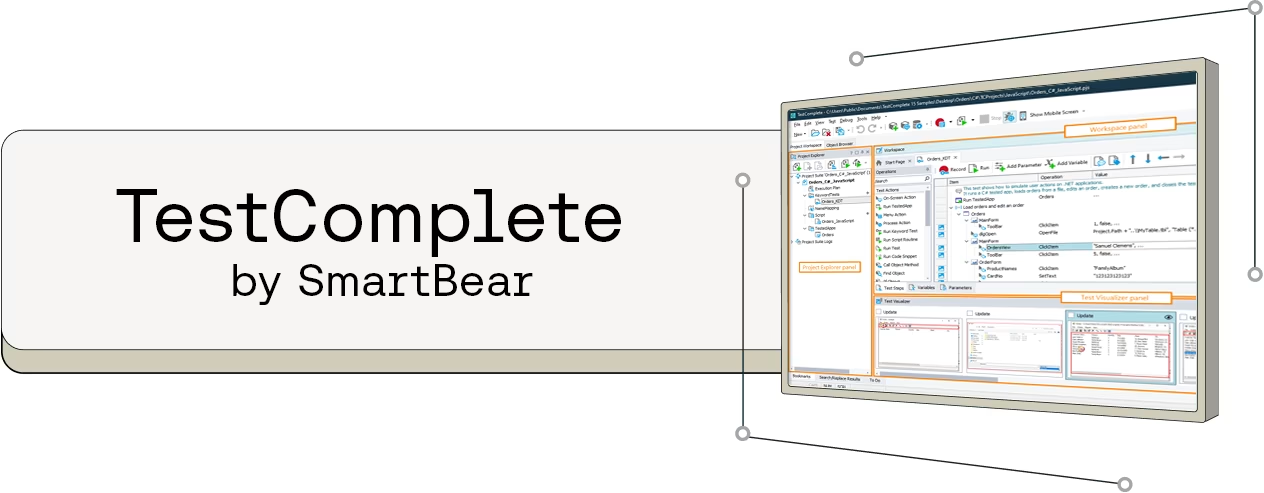
4. TestComplete (by SmartBear)
TestComplete by SmartBear provides comprehensive test automation software with robust cross-browser testing capabilities, making it particularly appealing to teams seeking both scriptless and script-based testing approaches across desktop, web, and mobile applications.
Device and browser coverage: TestComplete supports testing across major desktop browsers, including Chrome, Firefox, Edge, and Internet Explorer, and it enables cross-browser test creation through a unified object model.
Testing capabilities: TestComplete distinguishes itself through flexibility in test creation approaches. Technical team members can script tests using JavaScript, Python, VBScript, or other supported languages. Non-technical testers can build tests through record-and-replay functionality or keyword-driven testing frameworks that don't require programming knowledge.
Performance and reliability: TestComplete delivers reliable test execution for teams working primarily with local browser installations. Test execution speed competes well with other desktop-based testing tools.
Integrations: Integrates well within the SmartBear suite but has a slightly more manual setup for external tools.
Pricing: Competitive, with customized “Base,” “Pro,” and “Advanced” pricing tailored to meet a team’s specific needs.
Gaps versus Sauce Labs
While TestComplete provides cross-browser testing capabilities, achieving comprehensive browser and device coverage comparable to Sauce Labs requires additional BitBar integration and associated costs.
TestComplete's strength lies in its extensive test automation capabilities across desktop applications, web applications, and mobile apps, all through a single IDE. However, for teams focused specifically on web cross-browser testing at scale, Sauce Labs provides more specialized infrastructure and enterprise features without requiring multiple product integrations.
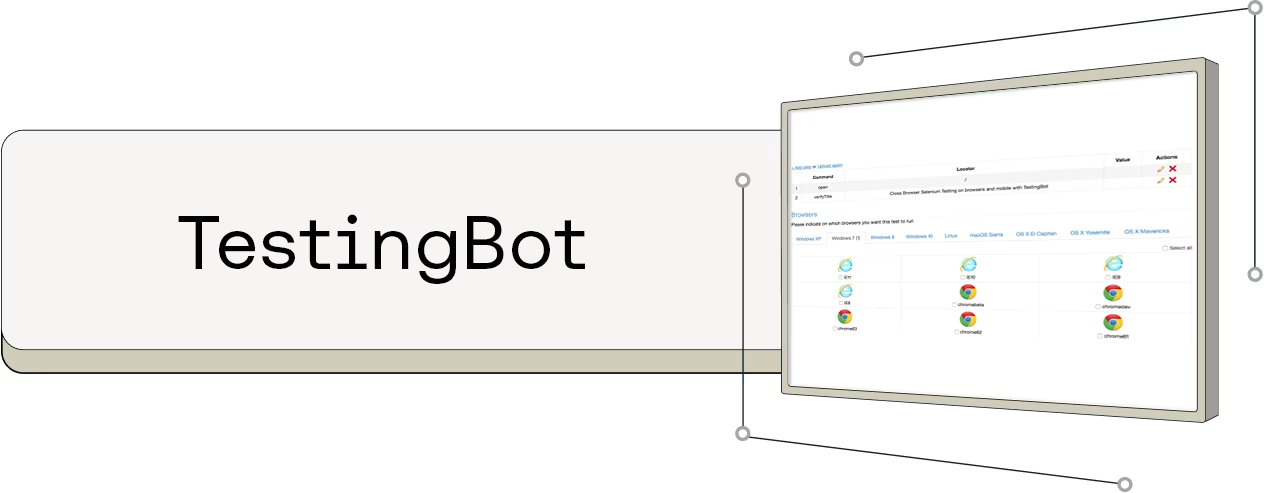
5. TestingBot
TestingBot positions itself as a straightforward, affordable alternative for teams seeking basic cross-browser testing capabilities without the complexity of enterprise solutions.
Device and browser coverage: Good coverage of current and legacy browsers, with a substantial real device cloud, as well as emulators and simulators.
Testing capabilities: Provides manual and automated testing, with every test including screenshots and video recordings for debugging and analysis.
Performance and reliability: Generally stable for mid-sized testing suites, but its infrastructure scale doesn’t match larger competitors.
Integrations: TestingBot’s integration set covers basic requirements but lacks the breadth of platforms like Sauce Labs or BrowserStack.
Pricing: TestingBot’s pricing starts at more affordable levels than premium competitors. Plans kick off as low as $20/month and scale based on parallel session requirements and feature access.
Gaps vs. Sauce Labs
Smaller teams and startups generally favor the more affordable TestingBot for live and automated testing, but it lacks the comprehensive device coverage, particularly in real devices, that Sauce Labs provides. For teams requiring deep enterprise integration and massive scale, Sauce Labs remains the dominant player.
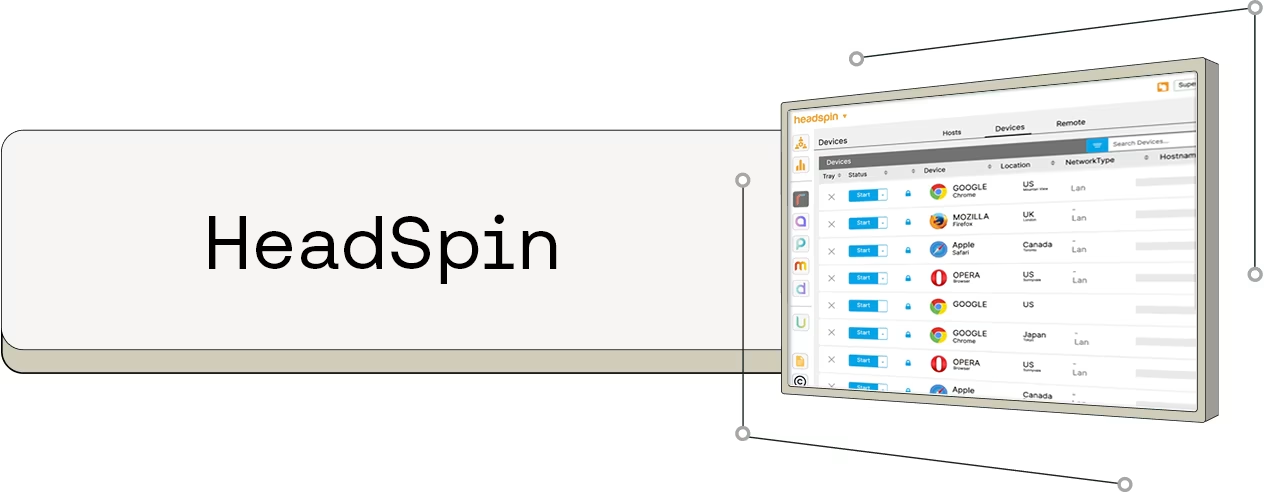
6. HeadSpin
HeadSpin positions itself as a comprehensive digital experience platform emphasizing the actual user experience alongside cross-browser testing. While many platforms focus on the browser's code, HeadSpin looks at how the application performs on real devices in real-world conditions.
Device and browser coverage: HeadSpin provides access to thousands of SIM-enabled real devices located in over 50 locations worldwide, allowing teams to test their web applications on actual carrier networks (like 5G or LTE) and observe how regional latency affects performance.
Testing capabilities: The platform is framework-agnostic, supporting Selenium, Appium, and other major automation frameworks. It is particularly strong in automated regression testing and audio/video quality testing for streaming or communication apps.
Performance and reliability: HeadSpin excels in performance monitoring, automatically capturing “experience AI” insights that identify issues during test runs.
Integrations: Offers robust integration with CI/CD pipelines and provides a powerful API for custom reporting and data extraction.
Pricing: Offering Lite ($39/month), Go ($125/month), and Pro (custom) options, HeadSpin typically uses a pricing model based on device usage and geographic requirements.
Gaps vs. Sauce Labs
HeadSpin is highly specialized in performance and global network conditions. However, for standard cross-browser testing of a web application’s functional UI, it can sometimes be overengineered. Sauce Labs provides a more streamlined, developer-centric workflow, and its unified platform — which includes comprehensive visual testing and an integrated debugging environment — is often more efficient for SDETs who need to move between functional tests and UI validation quickly.
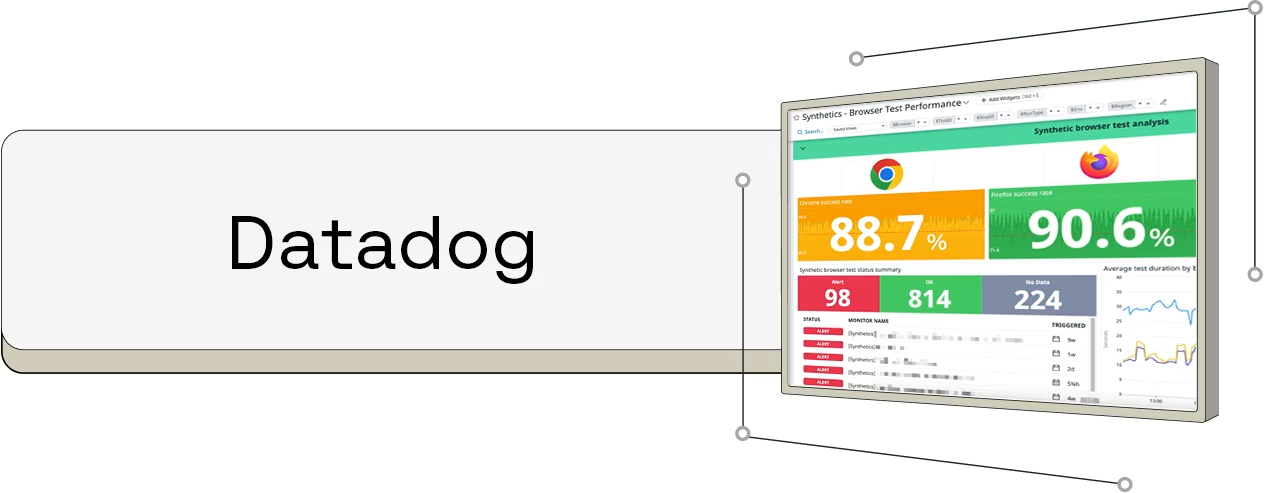
7. Datadog
While widely known as an observability and monitoring powerhouse, Datadog has expanded its continuous testing suite to offer a deeply integrated browser testing experience.
Device and browser coverage: Datadog offers a solid range of managed browsers across various global locations. While it may not match the sheer volume of niche legacy versions found in Sauce Labs, it covers the primary environments required by modern web teams.
Testing capabilities: Datadog offers comprehensive testing capabilities through its Synthetic Monitoring and Continuous Testing features, allowing users to create code-free API, browser, and mobile tests that simulate user journeys and validate endpoints across various protocols.
Performance and reliability: Built on the Datadog infrastructure, the system offers excellent reliability, providing a 360-degree view that links failed tests directly to backend traces, logs, and infrastructure metrics.
Integrations: Integration is Datadog’s primary strength. Tests are natively linked to the entire Datadog ecosystem.
Pricing: Pricing is typically based on the number of "test runs" or synthetic checks, which can be cost-effective for targeted testing but may become expensive for massive, high-concurrency automation suites.
Gaps vs. Sauce Labs
Datadog is an “observability-first” tool, whereas Sauce Labs is “quality-first.” Sauce Labs provides a significantly deeper environment for SDETs, including a comprehensive Real Device Cloud for mobile and specialized support for every major open-source automation framework. If your goal is deep functional debugging, Sauce Labs offers more granular tools (like network capture and high-fidelity video) that are specifically optimized for the QA lifecycle rather than just production health checks.
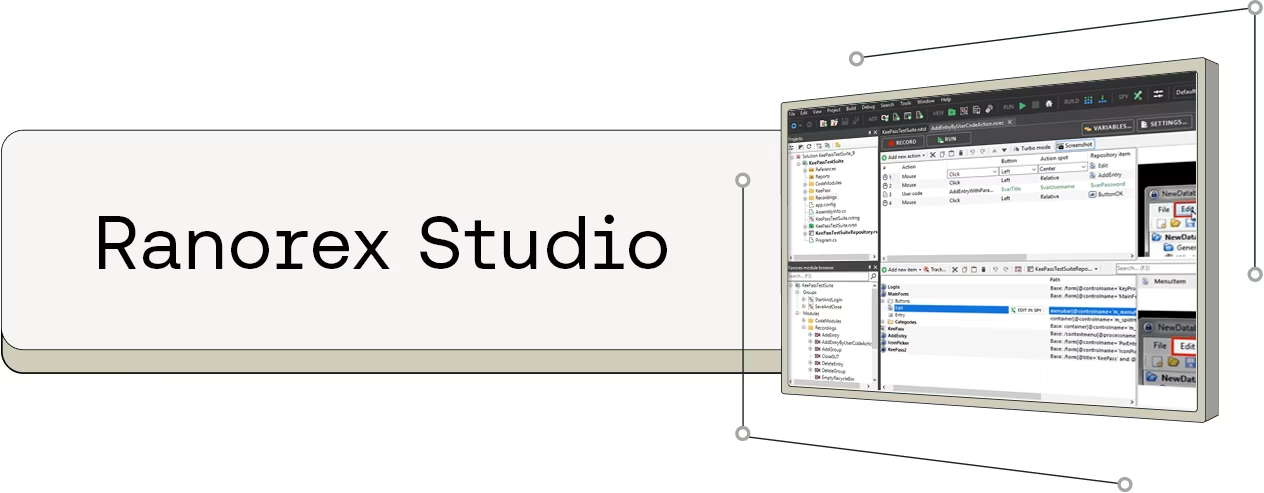
8. Ranorex Studio
Ranorex Studio offers an enterprise-focused test automation platform, with a particular strength in desktop application testing, as well as web and mobile capabilities.
Device and browser coverage: Ranorex supports web testing across major browsers through integrated Selenium WebDriver. Mobile testing spans iOS and Android through Appium integration. The platform’s differentiation lies more in its support for desktop applications than in its web-specific coverage.
Testing capabilities: It emphasizes codeless test creation through capture/replay and visual object recognition. Cross-browser testing leverages Selenium integration, allowing tests to run across browser configurations.
Performance and reliability: Ranorex delivers stable test execution for its target use cases, particularly desktop application testing. Web testing performance matches what teams would expect from Selenium-based approaches.
Integrations: Ranorex integrates with standard CI/CD platforms and can work with cloud testing services for broader browser coverage.
Pricing: Ranorex requires custom quotes based on license requirements, targeting enterprise customers willing to invest in comprehensive test automation capabilities across application types.
Gaps vs. Sauce Labs
Ranorex focuses on providing test automation software rather than cloud testing infrastructure. Teams must separately arrange for comprehensive browser coverage, real device access, and execution infrastructure that Sauce Labs provides natively. Ranorex’s web testing capabilities exist alongside its desktop testing focus, whereas Sauce Labs specializes specifically in web and mobile browser testing at scale.
9. Reflect
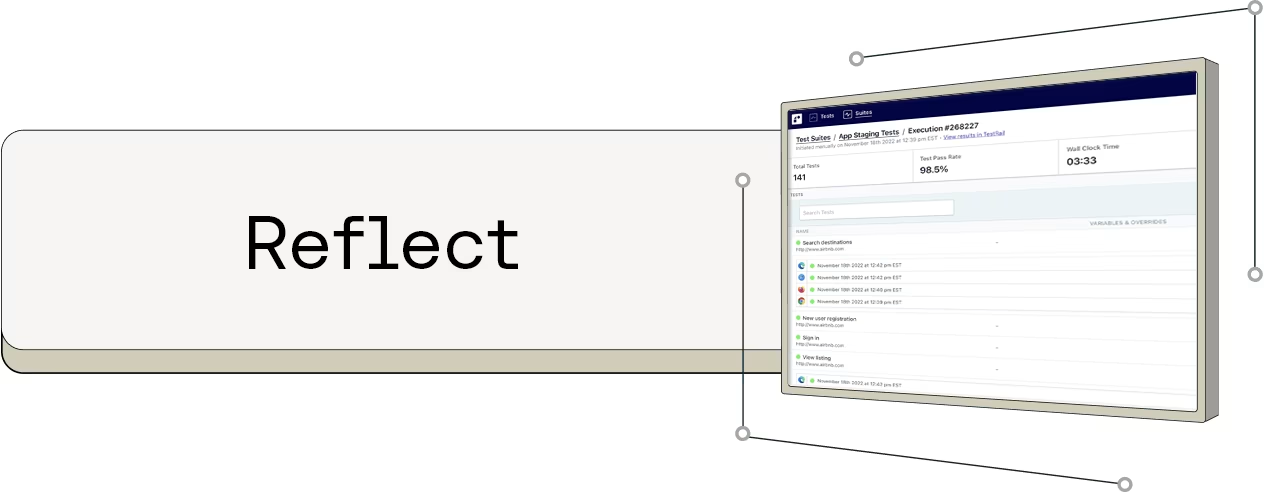
Reflect — another SmartBear solution — is a modern, no-code testing platform designed to simplify the creation and maintenance of automated tests. Its distinct approach allows teams to build comprehensive test suites without writing a single line of code.
Device and browser coverage: Reflect provides solid coverage of all modern browsers, including Chrome, Firefox, Edge, and Safari. However, because it is a cloud-native recording tool, its focus is primarily on the latest stable versions of these browsers rather than a deep library of legacy or mobile-specific environments.
Testing capabilities: Built around ease of use, Reflect converts interactions into resilient automated scripts. It also features “self-healing” technology, which makes the scripts more resilient to UI changes.
Performance and reliability: Enabling teams to build automated tests up to 10 times faster than code-based alternatives, Reflect is highly reliable in reducing test maintenance and eliminating flakiness by automatically adapting to UI changes.
Integrations: Reflect offers native integrations with popular CI/CD platforms, including GitHub Actions, CircleCI, and Jenkins, as well as project management tools such as Jira and Slack, for instant bug reporting.
Pricing: The Team plan starts at around $225 per month, with higher tiers available for Premium, Advanced, and Enterprise needs that require more parallel execution and advanced features.
Gaps vs. Sauce Labs
While Reflect is an excellent choice for teams that lack dedicated SDET resources, it lacks the technical depth and hardware variety that Sauce Labs offers. Reflect cannot match Sauce Labs’ massive Real Device Cloud. Furthermore, for complex enterprise apps that require intricate logical branching or specialized security tunneling, a code-based approach on the Sauce Labs platform offers significantly higher flexibility and control than a no-code recorder can provide.
10. QA Wolf
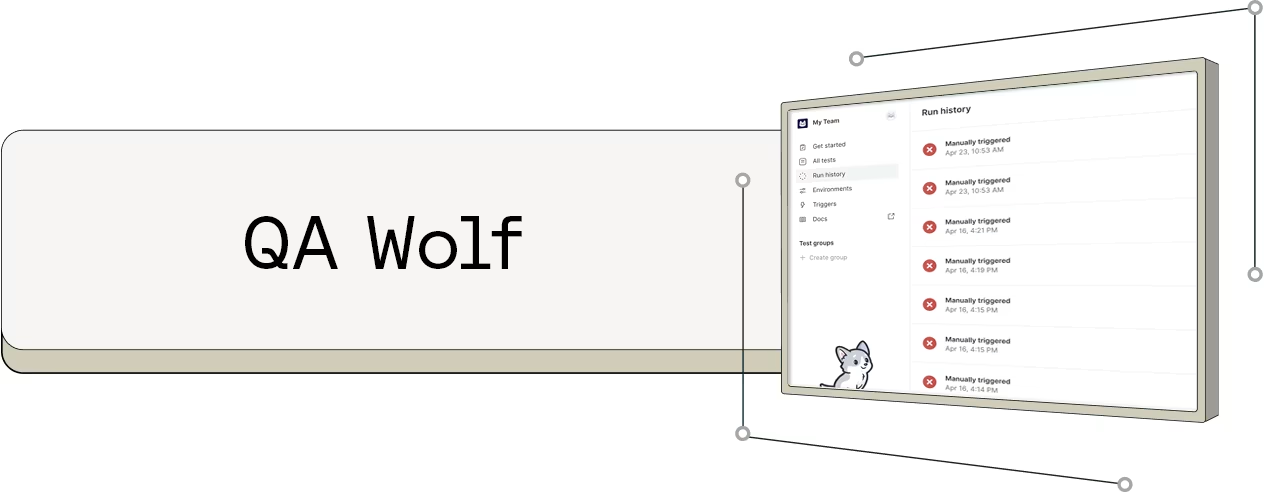
QA Wolf is a newer entrant that offers managed automated testing services rather than just software tools, targeting teams that want testing outcomes without building internal QA expertise.
Device and browser coverage: Coverage encompasses a wide range of devices and popular browsers, with specific configurations tailored to a client's individual needs.
Testing capabilities: QA Wolf creates and maintains automated test suites for clients through a service model, promising 80% test coverage in weeks.
Performance and reliability: As a managed service, QA Wolf handles reliability and performance rather than customers managing these concerns directly.
Integrations: QA Wolf integrates tests into client CI/CD pipelines, providing test results through standard mechanisms as part of service delivery.
Pricing: Pricing focuses on outcomes rather than tool access, structured around the number of tests and coverage provided, as opposed to usage-based SaaS pricing.
Gaps vs. Sauce Labs
QA Wolf serves teams that want to outsource test creation and maintenance rather than building internal capabilities. This service model doesn't compete directly with Sauce Labs' infrastructure platform, but its Playwright-only approach limits framework flexibility compared to Sauce Labs' support for multiple automation frameworks. The service model also means less direct control over device selection, test timing, and infrastructure details that enterprise teams often require.
Reviewing the industry’s top contenders highlights the diverse approaches to quality, yet selecting the right one ultimately requires weighing these technical specifications against your team’s long-term growth and scalability needs.
| Platform | Core Strength | Device Strategy | Starting Price |
|---|---|---|---|
| Sauce Labs | Enterprise scalability | Thousands of real devices, emulators + simulators | $39 per month |
| BrowserStack | Large real device cloud | 30,000+ real devices (no emulators + simulators) | $39 per month |
| TestMu AI | AI-native nature | Real devices plus emulators + simulators | $15 per month |
| TestComplete | Complex desktop-centric apps | Desktop-focused with web + mobile capabilities | Custom |
| TestingBot | Fast onboarding | Real devices + virtual infrastructure | $20 per month |
| HeadSpin | Digital experience | Global SIM-enabled physical hardware | $39 per month |
| Datadog | Unified observability | Managed global fleet | Usage-based |
| Ranorex Studio | Desktop-heavy apps | Local browsers + Appium or Selenium | Custom |
| Reflect | No-code velocity | Latest stable modern browser versions | $225 per month for Team plan |
| QA Wolf | Managed outcomes | Wide range of devices + popular browsers | Outcome-based |
Choosing the best cross-browser testing tool
Selecting the right cross-browser testing tool for your organization involves more than just checking a list of features.
Consider these questions when evaluating platforms:
Do you need real devices or are emulators sufficient?
What’s your required browser coverage, particularly for legacy versions?
Will you run tests primarily through automation or require extensive manual testing?
How important are AI-powered analytics and failure analysis?
What security certifications does your organization require?
If you are a solo developer or part of a very small startup, a lower-cost provider might be enough to get you through the early stages while ensuring you aren’t shipping obvious bugs to your first few hundred users. However, for midsized companies and large enterprises, the requirements change. When you have multiple squads pushing code daily, the “cost” of a tool lies in the hours spent debugging flaky tests, the time wasted waiting for slow test suites to finish, and the potential revenue lost if a bug reaches production.
Sauce Labs is designed to address these enterprise-level pain points. A unified platform that covers functional, visual, and performance testing eliminates the need for a fragmented stack of different tools. Teams prioritizing comprehensive coverage and enterprise reliability find that Sauce Labs delivers unmatched value through extensive device support, proven infrastructure stability, and sophisticated features like AI-powered failure analysis. The platform’s unlimited testing minutes and unlimited users eliminate scaling concerns as testing demands grow. Even better, organizations in regulated industries benefit from Sauce Labs’ security certifications and enterprise support.
For teams ready to eliminate cross-browser inconsistencies while maintaining development velocity, request a Sauce Labs demo to experience the platform that over 300,000 active users trust to deliver flawless digital experiences across every browser, device, and operating system their customers use.

Stop letting QA be the bottleneck on AI-speed development.
Stop letting QA be the bottleneck on AI-speed development.



.png)