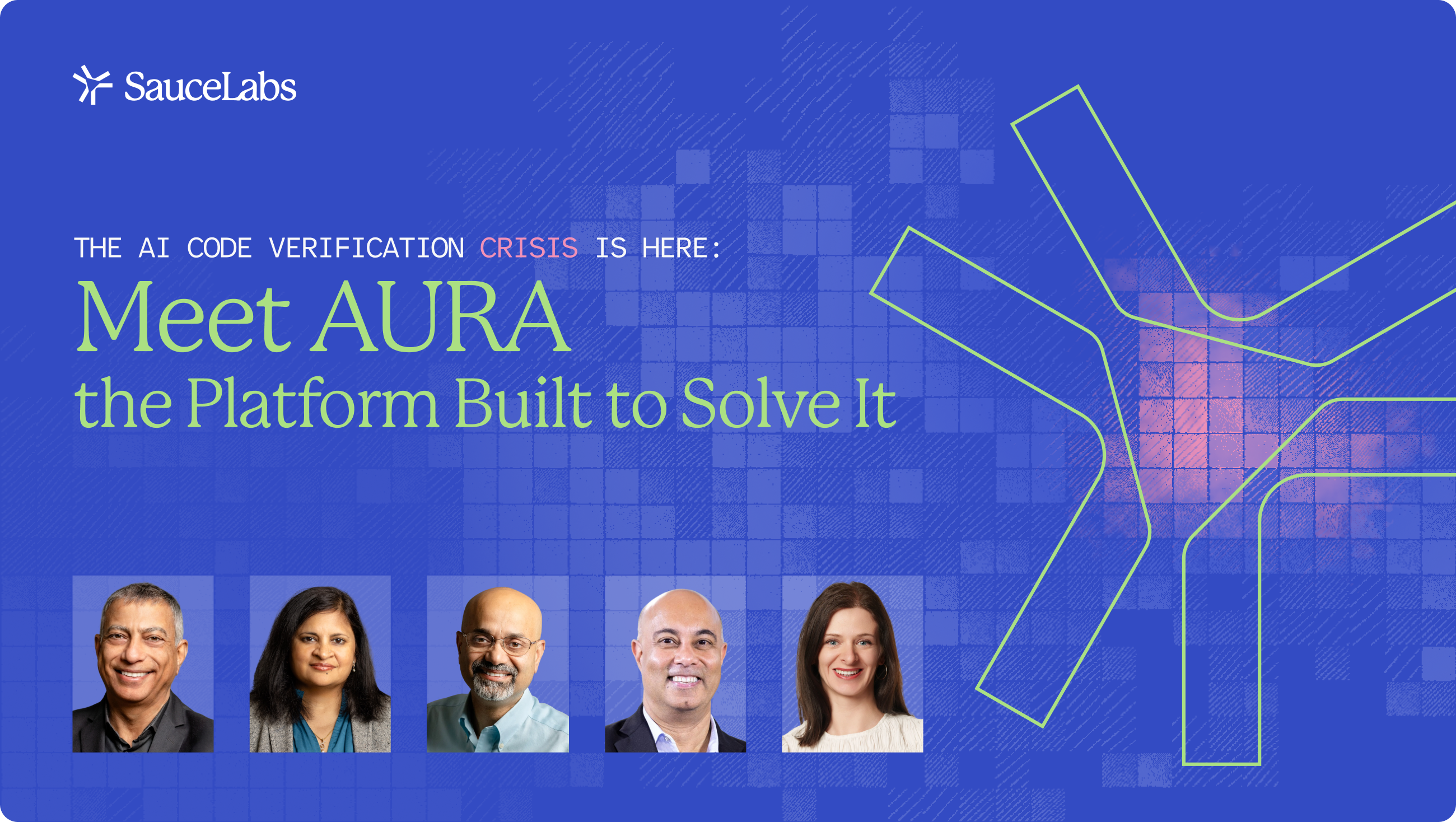
Sauce Labs Launches AURA to Close the AI Code Verification Gap.
|
Learn More
x
Test automation tutorials, guides, learnings, and insights
Empower your teams to focus on building better products by automating the generation of reliable, maintainable tests in minutes—not days.
Flaky tests erode trust in the pipeline one rerun at a time. Learn why tests flake, how to tell a flaky test from a real regression, and how to fix the root cause instead of just hitting rerun.
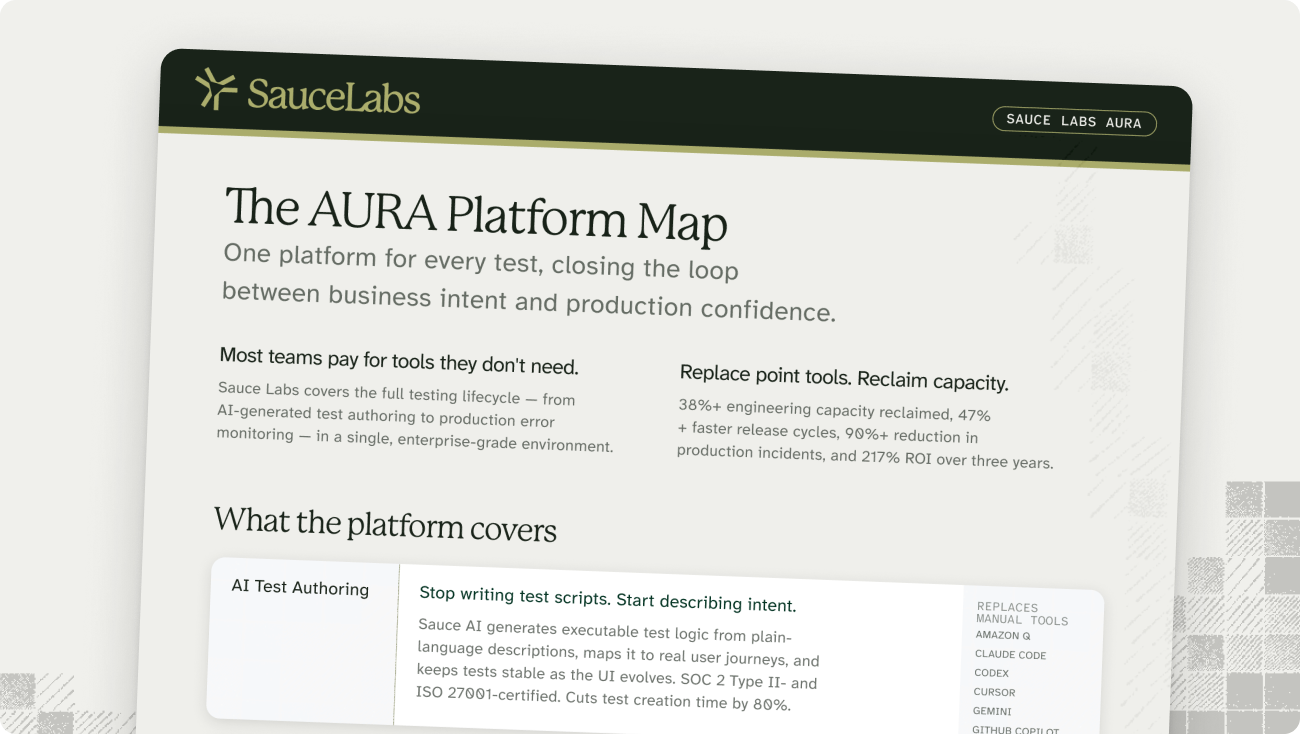
Test automation tells you what happened. Release assurance empowers you to decide what to do about it, closing the loop from business intent to production confidence.
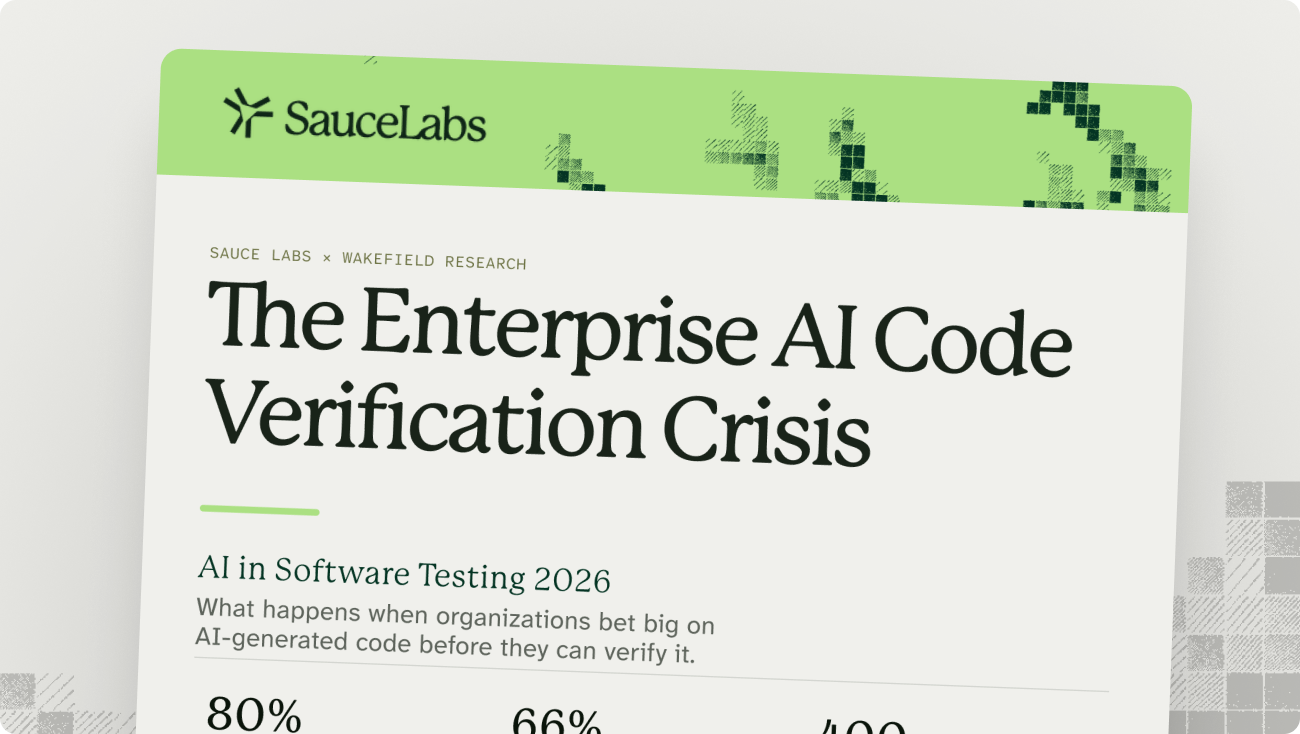
Companies already spend more than $1 trillion a year trying to catch bad code before it ships. AI is making that job a lot more difficult.
Leadership has visibility into more AI-generated code than ever. But seeing it and trusting it are two separate things.
A practical definition of the discipline that proves a release is ready to ship, backed by evidence instead of opinion.
AI made writing code effortless, but verifying it became the hardest job in software. So we rebuilt Sauce Labs around release assurance to close that gap.
Buying the devices is the easy part. The other 90% of the work is what nobody builds into the budget.
As AI becomes a more powerful tool in the hands of engineering teams, Sauce Labs becomes the first — and only — dedicated testing platform independently certified for responsible AI governance
When automated test script generation consumes a significant chunk of engineering capacity, your roadmap was already behind the eight ball before the sprint even began.
Flaky tests not only slow your pipeline but also limit how fast your entire organization can move. Learn how AI is finally breaking through it.
Is agentic AI testing more hype than substance? Clarifying what this category of software testing actually is, how it works in practice, and where it still falls short.
The gap between how fast organizations can generate software and how confidently they can validate it is becoming one of the defining operational risks of this era.